
Challenge No. 14: Create a list of products sold in all the months throughout the year.
Solved using:Excel (COUNT, FILTER, LAMBDA), Power Query (Date.Month, List.Distinct, List.Transform), and R.
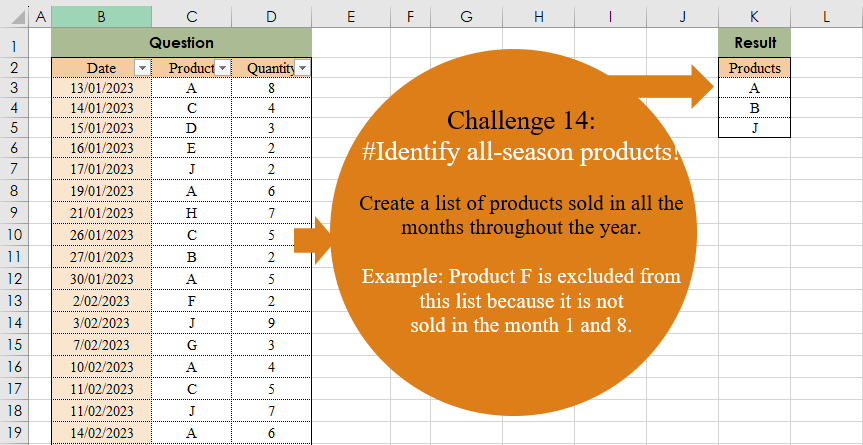
Challenge No. 14: Create a list of products sold in all the months throughout the year.
Solved using:Excel (COUNT, FILTER, LAMBDA), Power Query (Date.Month, List.Distinct, List.Transform), and R.
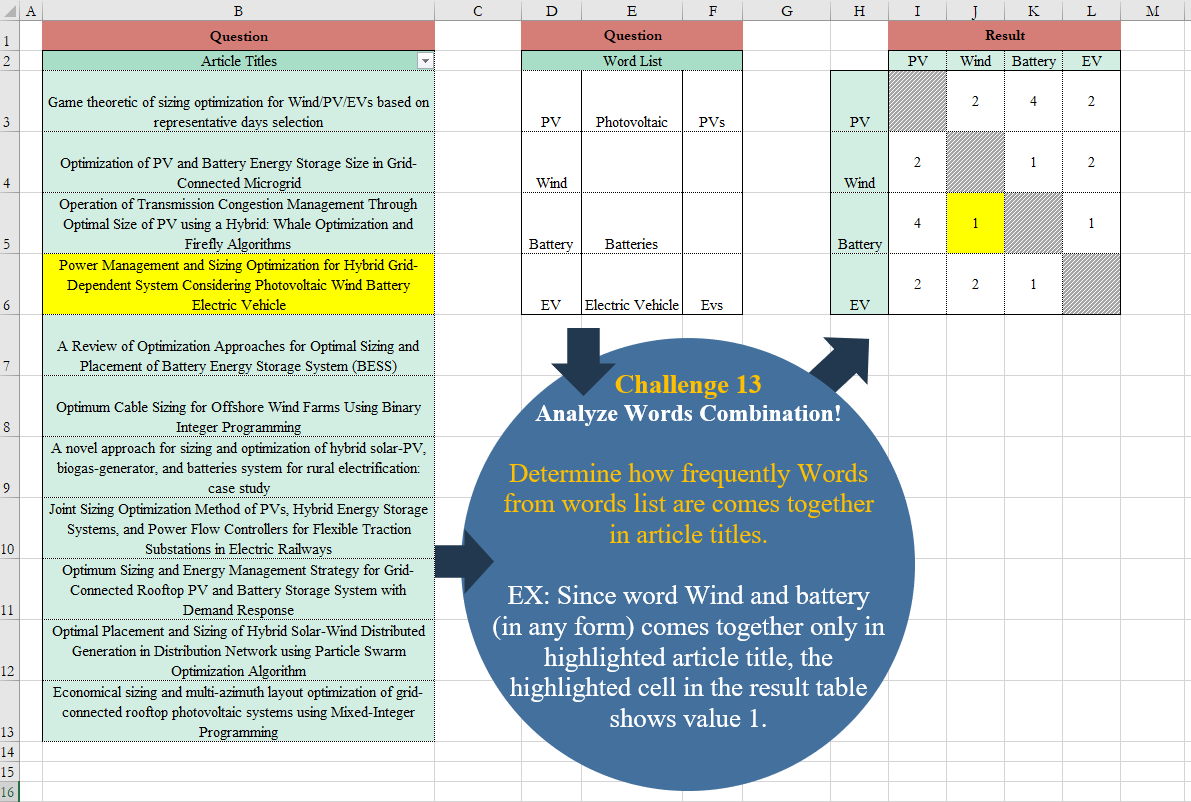
Challenge No. 13: Determine how frequently Words from words list are comes together in article titles.
Solved using:Excel (CHOOSEROWS, IF, LAMBDA), Power Query (Table.AddColumn), and R.
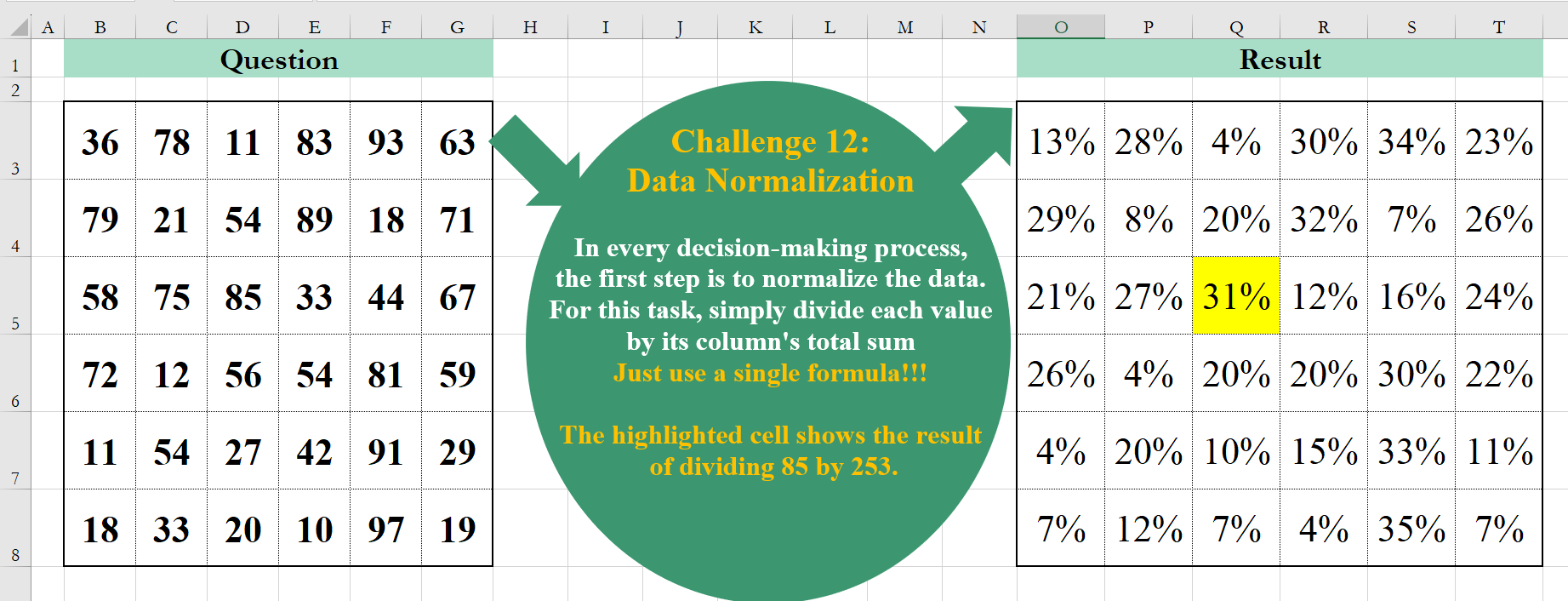
Challenge No. 12: In every decision-making process, the first step is to normalize the data.
Solved using:Excel (BYCOL, LAMBDA), Google Sheets, Power Query (List.Transform, Table.FromColumns, Table.ToColumns), R, and VBA.

Challenge No. 11: Extract all item codes that are repeated at least in 3 out of 4 lists presented in the question table.
Solved using:Excel (BYCOL, FILTER, LAMBDA), Power Query (List.Combine, List.Distinct, List.Transform), and R.
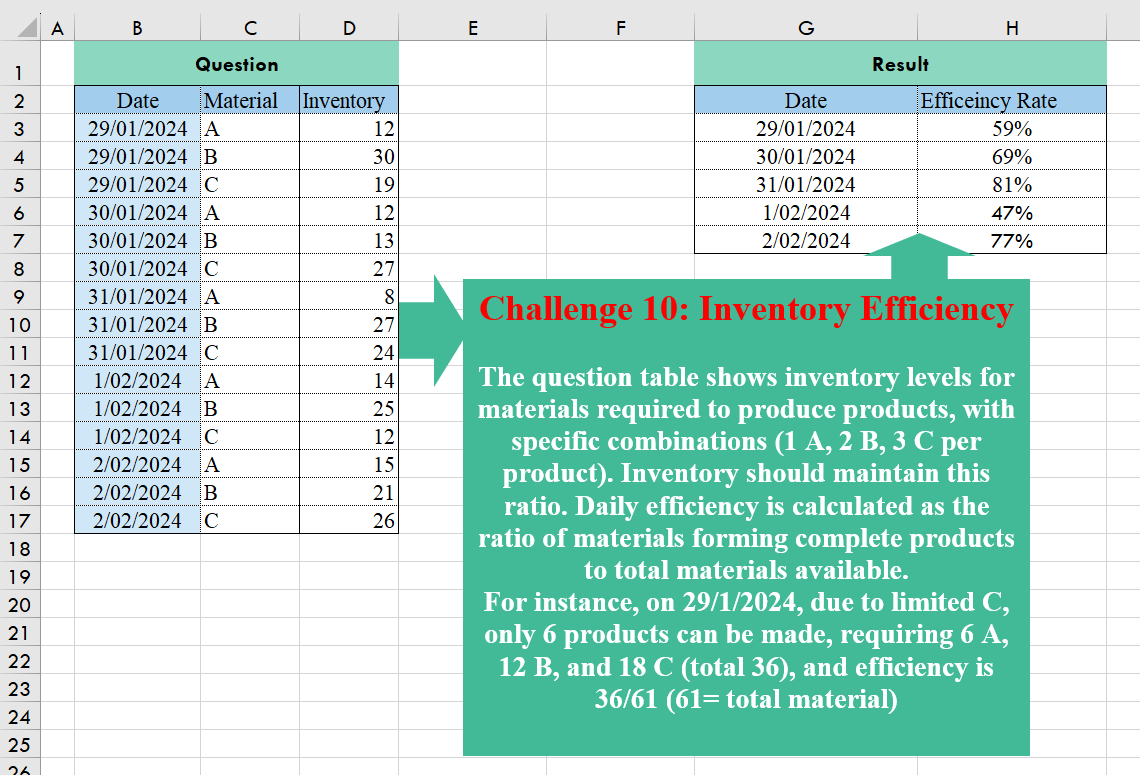
Challenge No. 10: The question table shows inventory levels for materials required to produce products, with specific combinations (1 A, 2 B, 3 C per product).
Solved using:Excel (HSTACK, LAMBDA, LET), Power Query (Table.AddColumn, Table.Group), and R.
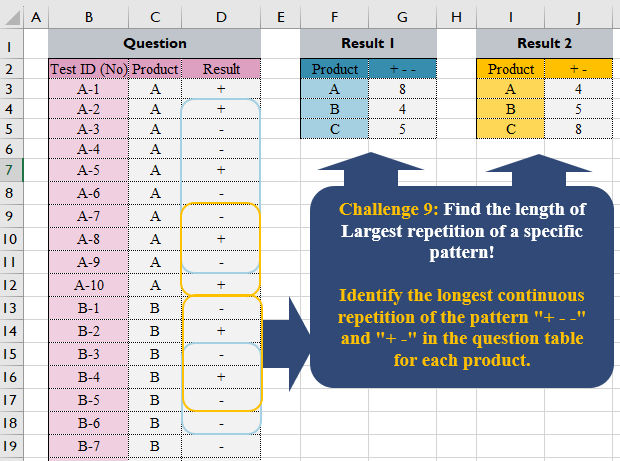
Challenge No. 9: repetition of a specific pattern!
Identify the longest continuous repetition of the
pattern “+ – -” and “+ -” in the question table for each product.
Solved using:Excel, Power Query, and R.

Challenge No. 8: The Question’s table outlines warehouse transactions with records for Initial value (warehouse product count), Add (purchased and incoming products), and Reduce (sold and outgoing products).
Solved using:Excel, and Power Query.

Challenge No. 7: Filter rows with quantity equal to 9 and display the entire result in unhidden cells.
Solved using:Excel, and Power Query.
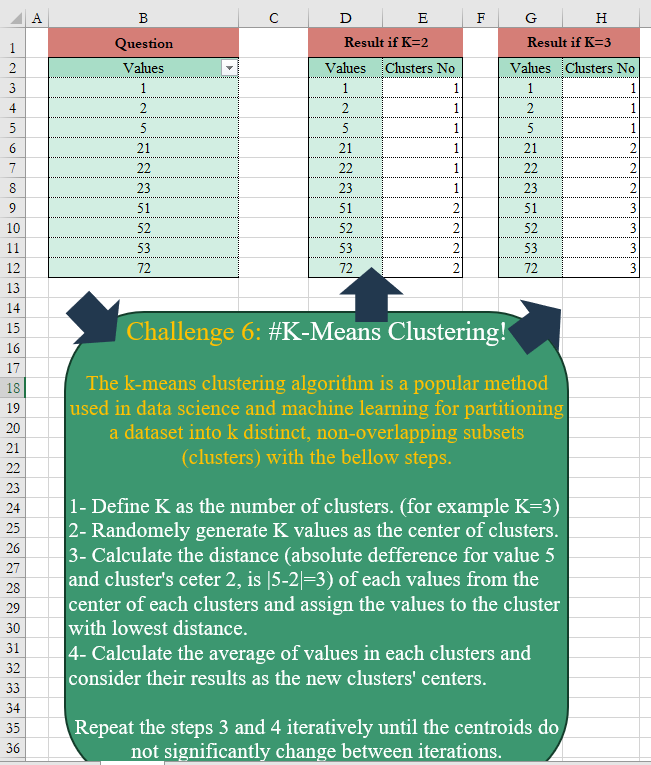
Challenge No. 6: The k-means clustering algorithm is a popular method used in data science and machine learning for partitioning a dataset into k distinct, non-overlapping subsets (clusters) with the below steps.
Solved using:Excel, and Power Query.

Challenge No. 5: Determine how frequently products are bought together (same invoice number).
Solved using:Excel, and Power Query.